


Phuket Leads Southeast Asia in Leisure Spending Growth
Recent data shows that Phuket has recorded a 4.7% increase in leisure travel spending compared to the same period last year, outpacing other major destinations across Southeast Asia. This growth reflects stronger visitor confidence and a shift toward higher‑value experiences on the island. The rise is measured in total expenditure by international tourists on accommodation, dining, activities and retail. Analysts note that the figure outperforms the regional average, which remains flat or slightly negative in several competing cities.
The increase is not merely a rebound from pandemic lows; it represents a sustained upward trend that began in early 2025 and has continued through mid‑2026. Hotel occupancy rates in Phuket’s luxury segment have climbed above 80% during peak months, while mid‑range properties report steady growth of 6% year‑on‑year. These numbers suggest that travelers are willing to allocate more of their budget to premium services such as private villa rentals, guided yacht tours and wellness retreats.
Local businesses have responded by expanding offerings that cater to discerning guests. New marine conservation tours, boutique spa complexes and farm‑to‑table dining concepts have opened in Patong, Kata and Kamala districts. The spending boost also benefits ancillary sectors like transportation, with increased demand for private transfers and charter flights to nearby islands such as Phi Phi and Similan.
Overall, Phuket’s performance signals a maturing tourism model that emphasizes quality over sheer volume, positioning the island as a benchmark for other Southeast Asian destinations seeking to upgrade their leisure appeal.
Singapore Emerges as the Top Source Market for Phuket Leisure Travel
Travel data from the first half of 2026 identifies Singapore as the leading country of origin for leisure visitors to Phuket. Singaporean tourists accounted for roughly 22% of all international arrivals focused on recreation, surpassing traditional markets such as China, India and Australia. This shift highlights the strong purchasing power and travel appetite of Singapore’s resident population.
Several factors drive this trend. Singapore’s high per‑capita income, combined with generous annual leave entitlements, enables residents to seek longer, more immersive holidays abroad. Direct flight connectivity between Singapore Changi Airport and Phuket International Airport has improved, with multiple daily departures operated by full‑service carriers and low‑cost airlines, reducing travel time to under two hours.
Moreover, Singaporean travelers demonstrate a preference for experiences that combine relaxation with cultural exploration. Surveys indicate that over 60% of Singaporean visitors to Phuket book activities such as Thai cooking classes, temple tours and island‑hopping excursions, rather than limiting themselves to beach lounging alone. This behavior aligns with the island’s push toward diversified, high‑value tourism products.
The Singapore‑Phuket corridor is now viewed as a strategic partnership by both tourism boards. Joint marketing campaigns have been launched in Singapore’s lifestyle magazines and digital platforms, emphasizing Phuket’s emerging adventure ecotourism offerings and luxury wellness resorts.
Regional Travel Trends Fuel Longer Stays and Deeper Experiences
The Traveloka SEA Index for Q2 2026 reveals that Southeast Asian residents are booking longer trips and prioritizing authentic experiences over quick getaways. Across the region, average length of stay for outbound leisure travel increased from 4.3 nights in 2024 to 5.6 nights in the first half of 2026. This extension translates directly into higher per‑trip expenditure, as travelers allocate more funds to accommodation, meals and activities.
In Indonesia, cities such as Yogyakarta, Bandung and Malang have seen a surge in domestic tourism, with travelers trading up on cultural heritage sites and culinary tours. Malaysia reports that nearly half of all outbound trips now cross a border, reflecting growing intra‑ASEAN mobility. Bali continues to mature as a family‑oriented destination, with average stay lengths reaching seven nights for visitors from Singapore and Thailand.
Krabi, a neighboring province to Phuket, has experienced booking growth of approximately five times its 2024 levels, driven by demand for eco‑lodges, rock‑climbing packages and mangrove kayaking tours. These patterns indicate that travelers across Southeast Asia are seeking destinations that offer both natural beauty and opportunities for active participation.
The broader implication is that Phuket’s leisure spending increase is part of a regional shift toward more meaningful, longer‑duration holidays. Destinations that can deliver varied experiences — ranging from relaxation to adventure — are best positioned to capture this evolving demand.
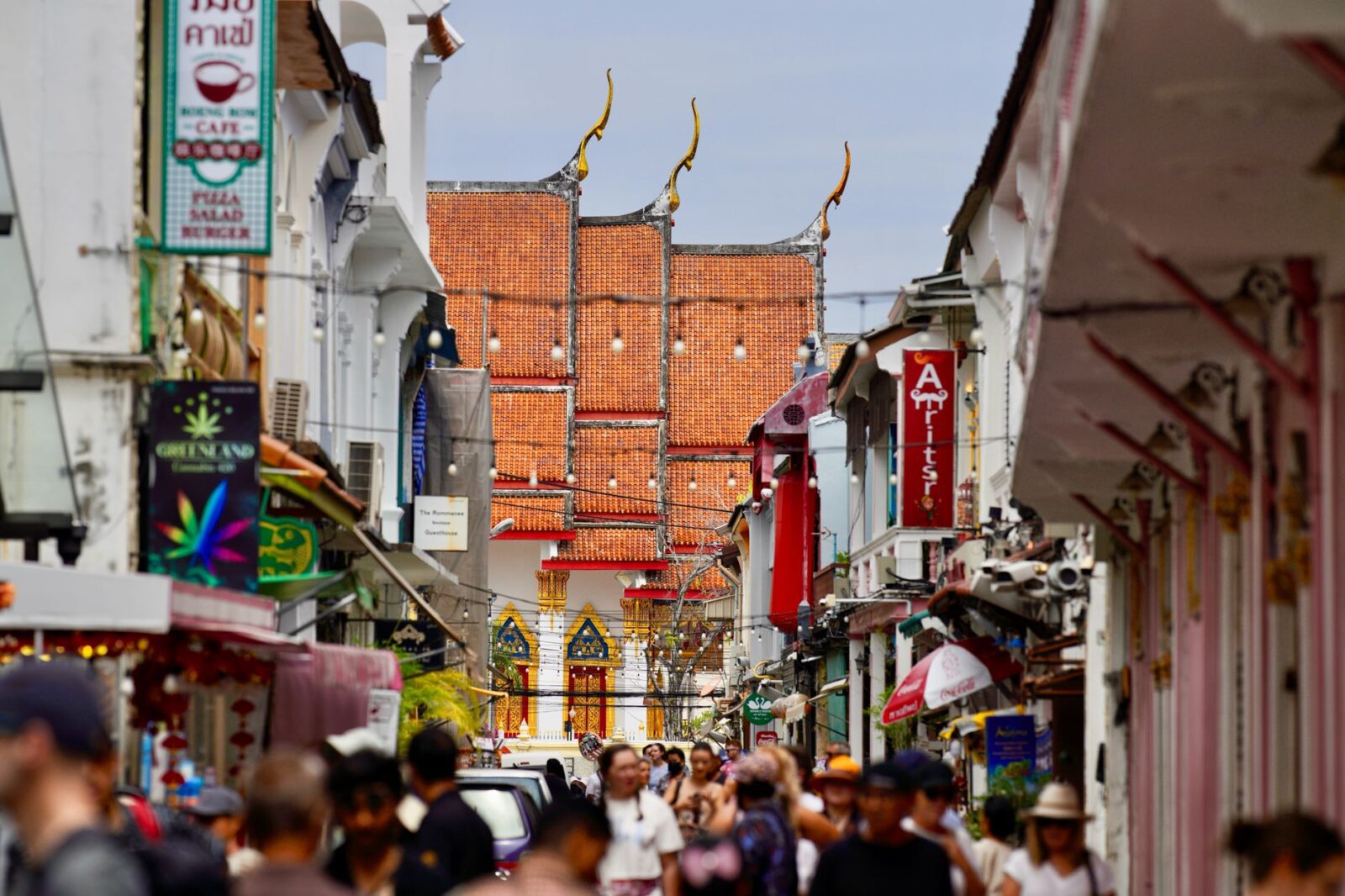
Bleisure Travel and Adventure Ecotourism Boost Phuket’s Appeal
Hotels in major Southeast Asian business hubs such as Bangkok and Kuala Lumpur are actively targeting the bleisure traveler — professionals who combine work trips with leisure extensions. Properties near convention centers now offer packages that include discounted rates for extra nights, complimentary airport transfers and curated local experience guides. This model makes it easy for a business traveler attending a conference in Bangkok to spend a weekend in Phuket without significant logistical hassle.
Phuket’s own product development has kept pace with this trend. The island has launched several adventure ecotourism zones in the northern districts, featuring guided treks through rainforest trails, sea‑turtle conservation programs and sustainable fishing village visits. By August 2026, official forecasts projected over 18.5 million international visitors to Phuket, with a notable segment drawn specifically to these new adventure offerings.
Luxury resorts have also integrated wellness components, offering yoga pavilions, Ayurvedic consultations and detox cuisine crafted from locally sourced organic produce. These additions cater to high‑spending travelers who prioritize health and sustainability alongside comfort.
The synergy between bleisure convenience and adventure ecotourism creates a compelling value proposition. Travelers can attend a morning meeting via video link from a beachfront villa, then spend the afternoon snorkeling in coral reefs or participating in a community‑based reforestation project. This flexibility is a key driver behind the observed 4.7% rise in leisure spending.
Economic Impact: Tourism Revenue and Thailand’s GDP Contribution
Tourism remains a cornerstone of Thailand’s economy, with direct revenue contributing an estimated 12 trillion baht to GDP in recent years. While historical figures vary — ranging from one trillion baht in 2013 to 2.53 trillion baht in 2016 — the sector consistently accounts for between 9% and 17.7% of national output when indirect effects are included. Phuket’s share of this revenue has grown proportionally to its visitor numbers and spending levels.
The 4.7% increase in leisure travel spending translates into hundreds of millions of additional baht circulating through the local economy each quarter. For perspective, a 1% rise in tourist expenditure across Thailand typically generates roughly 120 billion baht in extra economic activity. Applying this ratio, Phuket’s growth could be injecting close to 560 billion baht annually into sectors such as hospitality, retail, transportation and construction.
This influx supports job creation, with the tourism industry employing over 4.4 million people nationwide. In Phuket alone, hotel and restaurant staffing levels have risen by an estimated 8% year‑on‑year, according to local labor surveys. Ancillary businesses — ranging from boat operators to souvenir artisans — report higher order volumes and improved cash flow.
Government agencies have noted that the increased revenue provides greater fiscal space for infrastructure investments, including airport upgrades, road improvements and public beach maintenance. Such developments further enhance the island’s competitiveness and help sustain the upward spending trend.
Practical Implications for Travelers: Budgeting, Timing and Tips
For those planning a trip to Phuket in the coming months, the current spending environment suggests a few practical adjustments. First, accommodation prices in the high‑season period (November to April) have risen by approximately 5‑7% compared to 2024 levels, reflecting stronger demand. Travelers seeking better value may consider the shoulder months of May and October, when rates dip slightly while weather remains favorable for outdoor activities.
Second, allocating a higher daily budget for experiences can yield richer memories. A typical mid‑range traveler might previously have budgeted 2,500 THB per day for meals and tours; now, aiming for 3,000‑3,500 THB allows access to premium options such as private boat charters, guided jungle treks or high‑end spa treatments. These upgrades often provide better exclusivity and personalized service.
Third, leveraging the strong Singapore‑Phuket flight corridor can reduce travel costs. Booking tickets six to eight weeks in advance on carriers such as Singapore Airlines, Jetstar Asia or Thai Vietjet Air frequently yields fares under SGD 150 (approximately USD 110) round‑trip. Utilizing frequent flyer miles or promotional sales can push costs even lower.
Finally, travelers interested in bleisure arrangements should inquire with their employers about flexible work policies. Many multinational firms now offer “work‑from‑anywhere” days that can be combined with a short flight to Phuket, enabling a productive morning followed by an afternoon of leisure. Hotels in Phuket’s business districts often provide dedicated workspaces, high‑speed internet and meeting rooms at nominal fees.
Expert Outlook: What to Expect for Phuket Through 2027
Industry analysts anticipate that Phuket’s leisure spending growth will continue at a moderate pace, driven by three interlocking factors. First, the island’s ongoing investment in sustainable tourism infrastructure — such as wastewater treatment plants, renewable energy resorts and marine protected areas — is expected to attract eco‑conscious travelers willing to pay a premium for responsible practices.
Second, the diversification of source markets is likely to lessen reliance on any single country. While Singapore remains a top contributor, arrivals from India, the Middle East and Europe are projected to grow at double‑digit rates, supported by new flight routes and targeted marketing campaigns. This breadth helps buffer the destination against regional economic fluctuations.
Third, the integration of digital services — including seamless e‑visa applications, contactless payment systems and AI‑powered itinerary planners — is set to improve the overall visitor experience. These technologies reduce friction, encourage longer stays and increase secondary spending on local goods and services.
Potential headwinds include global fuel price volatility, which could affect airfare costs, and occasional weather disruptions during the monsoon season. However, the island’s improved drainage networks and expanded indoor attraction offerings — such as art galleries, culinary schools and wellness centers — are designed to mitigate seasonal impacts.
Overall, the consensus among tourism economists is that Phuket will maintain its position as a leading leisure destination in Southeast Asia, with annual spending growth averaging between 3% and 5% through 2027, provided that sustainability and product diversification remain priorities.
Frequently Asked Questions
- How much has leisure travel spending in Phuket increased recently?
According to the latest regional data, leisure travel spending in Phuket rose by 4.7% compared to the same period in the previous year, outpacing other major Southeast Asian cities. - Why is Singapore considered the top source market for Phuket leisure travel?
Singaporean travelers accounted for roughly 22% of all leisure arrivals to Phuket in early 2026, driven by high disposable income, convenient flight connections and a preference for longer, experience‑rich holidays. - What types of experiences are driving the higher spending in Phuket?
Visitors are allocating more funds to private villa rentals, guided yacht tours, wellness retreats, adventure ecotourism activities such as rainforest treks and sea‑turtle conservation, and cultural offerings like Thai cooking classes and temple visits. - How should travelers adjust their budgets for a trip to Phuket in 2026‑2027?
Travelers may consider increasing their daily experience budget by 15‑20% to access premium activities, while looking at shoulder‑season months for better accommodation rates. Booking flights six to eight weeks ahead can also secure lower fares. - Is Phuket suitable for bleisure travel, and what facilities support it?
Yes. Many hotels in Phuket’s business districts offer dedicated workspaces, high‑speed internet and meeting rooms, while proximity to the airport allows easy combination of work trips with leisure extensions. The island’s growing ecotourism and wellness offerings further enhance the bleisure appeal.
Stay informed with the latest travel news, visa updates, and destination guides. Follow HimalayanCrest.com for weekly travel intelligence delivered by our editorial team.